 Skip-the-line available
 Málaga's Old Town Around the Picasso Museum: A Walkable Day
Casa Natal, the Alcazaba and Roman theatre, the cathedral, the Centre Pompidou and Calle Larios — a compact Picasso-centred circuit.
Few major museums anchor a tighter sightseeing circuit than the Museo Picasso Málaga. From its door on Calle San Agustín, the cathedral is three minutes' walk, the Roman theatre and Alcazaba under ten, and Picasso's birthplace on the Plaza de la Merced about five — the whole canonical old town sits inside a ten-minute radius, pedestrianised and almost entirely flat. That compactness lets you build a relaxed day around a single timed museum slot without ever needing a taxi. This guide lays out the old town's headline sights in walking order, with honest timings, so the museum becomes the fixed point everything else flexes around rather than a stop you rush.
Casa Natal: Where Picasso Began
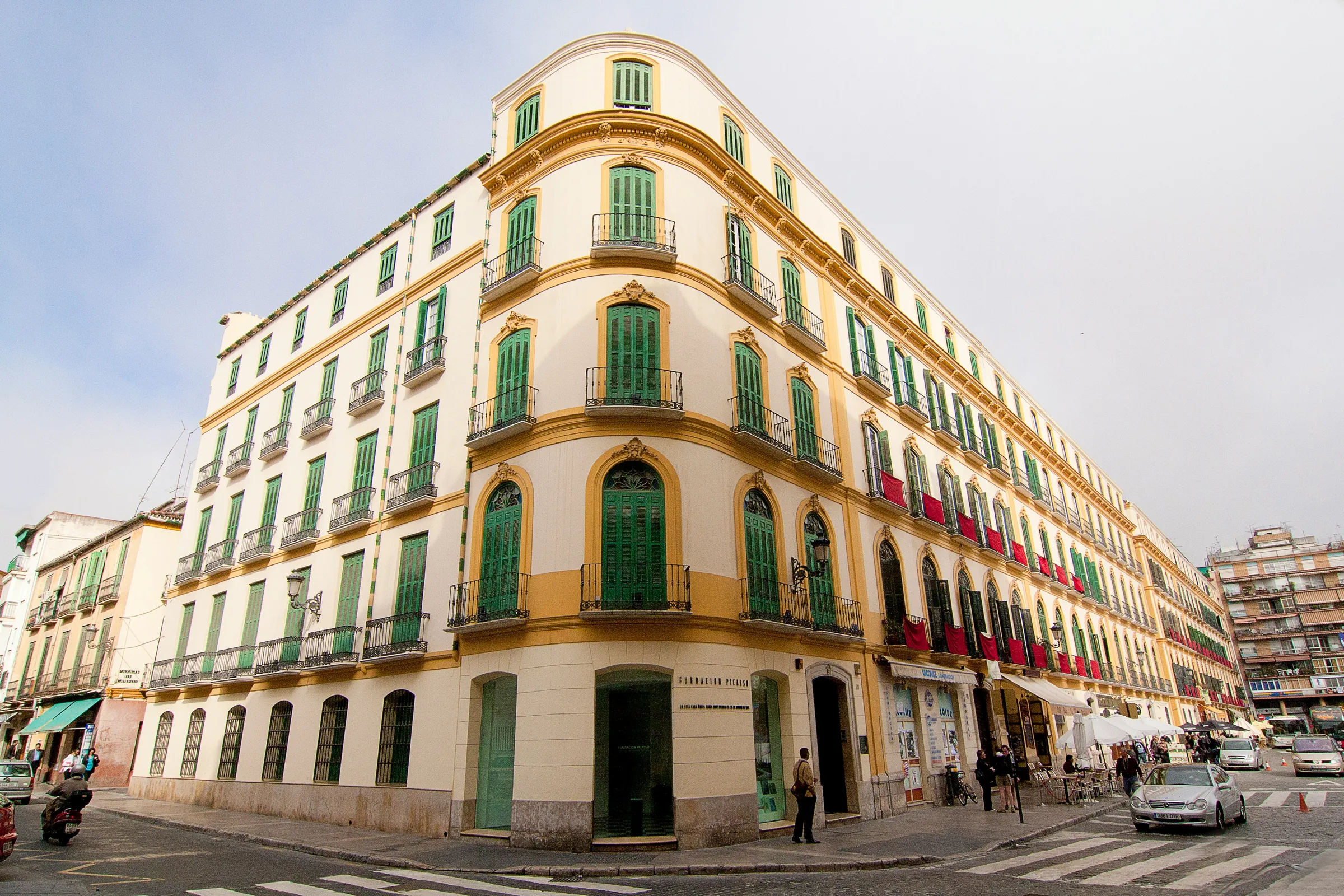
Start on the Plaza de la Merced, a broad, plane-shaded square at the edge of the old town about five minutes' walk from the museum. Picasso was born here on 25 October 1881 at number 15, the first child of José Ruiz Blasco, a painter and drawing teacher, and María Picasso López. The house still stands and is run by the city's Fundación Picasso as the Casa Natal — a modest house-museum of family memorabilia, period rooms and changing displays. It is a biography museum, not an art museum: you go for the story of the family and the world that produced the artist. Allow 45 minutes to an hour. Tickets are sold separately by the city and its opening hours differ from the art museum's, so check the Fundación Picasso's own site for the current schedule.
The square itself is part of the experience. Café terraces line it, a bronze Picasso sits on a marble bench at its southern end — perpetually photographed with strangers beside him — and pigeons flock the plane trees, the same birds, in spirit, that fill his father's canvases and his own most famous lithograph. It is the natural place to begin a Picasso day: coffee on the square, the Casa Natal while you are fresh, then the short walk down Calle Granada towards the Palacio de Buenavista. Doing the birthplace first changes how the museum lands — the bulls, doves and family portraits all read differently once you have stood where the story started.
The Alcazaba and the Roman Theatre
Ten minutes' walk from the museum, two thousand years of Málaga sit stacked against a single hillside. At the foot stands the Roman theatre, built into the western slope in the 1st century AD and rediscovered in 1951; you can look down into the restored cavea from the street, with a small interpretation centre alongside. Rising directly behind and above it is the Alcazaba, the Moorish palace-fortress begun by the Hammudid dynasty in the early 11th century and largely rebuilt by the Nasrid emir Muhammad II in the 14th. The juxtaposition is the point: Roman stage and Moorish citadel share one view, the fortress gateways above reusing Roman columns and capitals taken from the theatre below.
The Alcazaba is the old town's great climb and worth the modest effort — concentric walls, horseshoe-arch gateways, and quiet patios with channels of running water in the Nasrid palatial quarter near the summit, all opening onto wide views over the port and the cathedral. Energetic walkers can continue up a walled corridor to the Castle of Gibralfaro, built on the higher hill to the east by the Nasrid emir Yusuf I in the 14th century, for the broadest panorama of all. If time is short, the Alcazaba alone gives the essential experience; cruise visitors on a tight clock often admire the theatre from below and save the climb. Wear proper shoes — the ramps are steep and the stone is polished smooth.
The Cathedral — La Manquita
Three minutes from the museum stands Málaga's cathedral, begun in 1528 on the site of the city's main mosque after the Christian reconquest and built and rebuilt over some two and a half centuries in successive Renaissance and Baroque styles. Its nickname tells the story: La Manquita, 'the one-armed lady', because the south tower was left unfinished — by tradition, the funds earmarked for it were diverted to other causes — leaving the great church visibly lopsided against the skyline. The single completed north tower still soars; the stump of the second is part of the city's affectionate identity. Inside, the scale is genuinely cathedral-sized, with a carved 17th-century choir and a forest of soaring columns.
The cathedral makes an easy counterweight to the modern art a few streets away: where the museum is intimate and 20th-century, the church is vast and centuries-deep, and the contrast is part of what makes a Málaga old-town day satisfying. The surrounding lanes — Calle San Agustín, Calle Císter and the small squares behind the apse — are some of the prettiest in the centre and reward unhurried wandering between sights. Rooftop access is sometimes available for those who want the climb and the view; check current arrangements on arrival. Either way, the exterior alone, seen from the cathedral square or the Alcazaba above, is one of the defining images of the city.
Centre Pompidou and the Port
Málaga reinvented itself this century as a museum city, and the boldest symbol of that is the Centre Pompidou Málaga, which opened in 2015 as the first Centre Pompidou outside France. It occupies 'El Cubo' — a multicoloured glass-and-steel cube by Daniel Buren, set above a subterranean gallery on the Muelle Uno quay, about a ten-to-fifteen-minute walk from the Picasso museum through the Parque de Málaga. Inside, rotating selections from the Paris collection's 20th- and 21st-century holdings include work by Giacometti, Magritte, Calder and Brâncuși; fittingly for this city, the permanent display has centred on portraiture and the influence of Picasso, closing the loop with the museum you began the day in.
The walk down to the port is half the pleasure. The Palmeral de las Sorpresas promenade and the Muelle Uno marina have become the city's waterfront living room — palm-lined, full of cafés and the small Pompidou shop — and the same stroll is how cruise passengers reach the old town from the port in fifteen to twenty minutes. If contemporary art is not your priority, the quay is still worth the walk for the sea air, the lighthouse and the view back to the cathedral and the Gibralfaro hill. It is a natural late-afternoon coda to a day that began with a 19th-century birthplace and a 16th-century palace.
Calle Larios and a Walkable Day
Calle Marqués de Larios — Calle Larios for short — is the old town's spine, a wide, marble-paved pedestrian boulevard of elegant shopfronts that most other central streets eventually feed into. It is where Málaga promenades in the evening, where the famous Christmas lights are strung in December, and a reliable point to reorient yourself: from its squares you are minutes from the cathedral, the museum and the Atarazanas market, the iron-and-glass food hall whose stained-glass window and tapas counters reward a midday detour. The whole old town is barely 1.5 kilometres across, so nothing here is more than a short, flat walk from anything else.
A comfortable full day, built around a single museum slot: Plaza de la Merced and the Casa Natal around 10:00, the Museo Picasso Málaga on a late-morning timed slot, then lunch in the old town — the lanes around Calle Granada and the Atarazanas market are the place to graze on tapas. Spend the softer afternoon on the Roman theatre and the Alcazaba, see the cathedral before evening, and finish with the walk down to Muelle Uno and the Centre Pompidou, or simply an evening passeggiata along Calle Larios. Cruise visitors can compress the same circuit into about five hours by trimming the Alcazaba climb. Whatever your pace, book the museum slot first and let the rest of the old town flex around it — it is the one fixed time in an otherwise free-form day.
Frequently asked
How far is the Picasso museum from Málaga's other main sights?
Everything central is within a ten-minute walk: the cathedral is about 3 minutes, the Plaza de la Merced and Casa Natal about 5, and the Alcazaba and Roman theatre under 10. The Centre Pompidou on the port is 10–15 minutes away. The old town is barely 1.5 km across and almost entirely flat and pedestrianised.
Can I see Picasso's birthplace and the museum on the same day?
Easily. The Casa Natal on Plaza de la Merced is about five minutes' walk from the museum. They are separate, separately ticketed museums; the natural order is the birthplace first for the family story, then the art museum. Allow about an hour at the Casa Natal and two hours at the museum.
Is the Roman theatre next to the Alcazaba free to visit?
The Roman theatre, built into the hillside in the 1st century AD, can be viewed from street level, with a small interpretation centre alongside. The Alcazaba fortress rising above it is a separate paid site, ticketed by the city.
Why is Málaga Cathedral called La Manquita?
La Manquita means 'the one-armed lady'. The cathedral, begun in 1528 on the site of the city's main mosque, was never given its planned south tower — by tradition the money was diverted elsewhere — so it stands visibly lopsided with only one completed tower.
What is the Centre Pompidou Málaga and where is it?
It opened in 2015 as the first Centre Pompidou outside France, housed in 'El Cubo', a multicoloured glass cube above an underground gallery on the Muelle Uno quay. It shows 20th- and 21st-century works from the Paris collection and is a 10–15 minute walk from the Picasso museum.
What is the best order to walk the old town?
Plaza de la Merced and the Casa Natal first, then the Picasso museum on a timed slot, lunch around Calle Granada or the Atarazanas market, the Alcazaba and Roman theatre in the afternoon, the cathedral, and finally the walk to Muelle Uno and the Centre Pompidou or an evening on Calle Larios.
Do I need transport to get between the sights?
No. The old town is compact, flat and pedestrianised — everything in this guide is a short walk apart. The only real climb is up into the Alcazaba and, optionally, on to the Gibralfaro castle above it.
Can cruise passengers do this circuit in a day stop?
Yes. The old town is a 15–20 minute walk from the cruise port along the Palmeral promenade, and the core circuit — museum, cathedral, theatre and a taste of the Alcazaba — fits comfortably in about five hours if you trim the full Alcazaba climb.